
Gardening is one of life’s great joys. It keeps us active, brings us outside, and rewards us with fresh, healthy food. But sometimes the work involved—bending, lifting, carrying, and long hours on the plot—can become harder to manage. There are many reasons why at various time in your life gardening may prove more challenging. Times when your health or physical ability are limited, either temporarily or permanently. The good news is that with a few clever adaptations, some forward planning you can still enjoy growing your own vegetables, without it feeling overwhelming.
This post address some of the adaptions, and suggestions for making gardening a bit more accessible for everyone.
I do need to set some boundaries before we start. Firstly I’m not an expert, I have taken the suggestions in this blog from various disability focused websites, a wee bit of personal experience and general internet research. Secondly please don’t take my suggestions without doing your own research first, especially if you intend to spend money on a product. Thirdly I would also strongly recommend you consult a doctor or specialist to discuss your health needs in connection with gardening.
Reduce bending, kneeling and repetitive strain
Bending and kneeling are often the hardest parts of gardening. With the right setup and tools, you can protect your back and joints.
Practical ideas:
- Raised beds at different heights: Bringing the soil up to waist level means less stooping and kneeling. Beds can be built to suit different needs—standing, seated, or wheelchair height.
- Containers on benches or tables: Lift pots (get someone to help you lift) and troughs up onto sturdy surfaces. Not only does this save your back, it can also create a lovely display of grouped vegetables or herbs.
- Long-handled and ergonomic tools: If plants are at ground level extended handles can help keep you upright while hoeing or weeding. Padded grips can reduce strain on wrists.
- Vertical gardening: Grow upwards with trellises, wigwams, or wall planters can help reduce bending. Beans, cucumbers, and tomatoes all climb well, making harvesting easier.
- Garden kneelers with handles: These double as a seat and a support when you need to get lower. My advice for these types of garden kneelers is to buy the best you can afford as the cheaper ones often break. If you know a good carpenter they may be able to make you something bespoke and you can a cushion for extra comfort.
- Back supports and braces: These can give extra stability, especially for longer sessions. They can be quite reasonably priced but may get hot and uncomfortable in the heat of the summer. They are useful for infrequent digging and twisting jobs where muscles are not built up for those particular tasks.
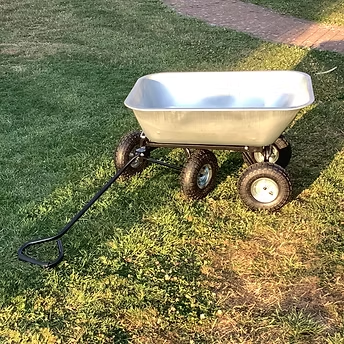
- Use wheels for heavy loads: A lightweight barrow, trolley, or rolling cart saves your back. Break heavy jobs into smaller tasks and carry lighter loads. More frequent trips with lighter loads might seem counter intuitive but it can save injury or further muscle strain.
- Switch tasks regularly: Avoid long spells of the same job. Alternate between sowing, watering, and harvesting to give your body a break.


Improve mobility and access in the garden
Getting around the garden or allotment safely and easily makes a big difference. Uneven paths, heavy tools, and long walks with a watering can all take the joy out of gardening.
Practical ideas:
- Smooth, wide pathways: Level, firm paths reduce trip hazards and make moving around more comfortable. Paths can be expensive to put in – but if you need them to be able to enjoy your garden then it might be worth considering. It also helps to keep your gardening space clear of possible trip hazards i.e. errant pots, bits of netting, garden tools. Obviously if you need ramps for wheelchair or frame access you may need to take advice from a qualified garden designer or builder to ensure ramps and paths are safe.
- Zoning your space: Keep your most-used beds, compost bins, and water butts close together so you don’t have to make long trips. It’s worth taking time to consider the design of your gardening area, think about what you will need an plan your area well.
- Rolling stools or wagons: Sit while you work, and use the storage underneath for tools. If you are in the market for one of these pieces of kit make sure you go to a reputable supplier and try them out before you buy. Some are studier than others so make sure you feel secure on it when sitting.
- Tool caddies and buckets: Keep tools with you to save repeated trips to the shed. Anything from a bucket, basket, or box will do just make sure it’s easy to carry.
- Lightweight barrows and trolleys: Two-wheeled barrows and folding carts are stable and easy to manoeuvre. Four wheeled barrows can also be useful as they are more stable yet still manoeuvrable. Keep in mind when planning your plot and you beds to leave enough space to wheel your barrow between the beds.
- Accessible allotments: Many councils and allotment associations offer plots with wider paths, water points nearby, or raised beds. It’s always worth asking about options.
Make planting and harvesting easier for tired or low vision eyes
Gardening relies a lot on eyesight—spotting seedlings, reading seed packets, or identifying weeds. With small changes, you can make tasks simpler and safer.
Practical ideas:
- Large, clear labels: Use bold, high-contrast plant markers so crops are easy to identify. Labels can be colour coded with tape or tied with bright ribbon.
- Bigger seeds or pre-spaced seed tapes: Beans, peas, and courgettes are easier to handle than tiny seeds. Seed tapes can reduce the fiddly part of sowing.
- Contrasting containers and edging: Growing in light pots with dark soil (or vice versa) makes seedlings stand out. Raised bed edges also help define planting spaces. Put tape or paint darker pots so they stand out.
- Smell and touch: Herbs and textured plants like mint, rosemary, or chives are easy to recognise without relying on sight alone.
- Bright tape: Use this to mark the edged of garden beds, garden furniture, or your small handle tools to distinguish their use.
- Sound beacon: A water feature, or wind chimes to identify certain areas of your space. Leave a radio on where you are working, so if you move from your work area you can easily identify your way back to your workspace.
- Good lighting: Solar or plug-in task lights make evening gardening safer and easier.
Make watering and feeding less effort
Watering is essential but can be one of the heaviest jobs. Smart systems help reduce the strain.
Practical ideas:
- Drip irrigation or soaker hoses: These water plants slowly and directly at the roots, cutting out most manual watering. These can get expensive so make sure you do some research before you buy.
- Water butts near beds: Place several around the garden so there’s always a nearby water source. Anything will do to collect water, an old bin, or a large bucket. Our polytunnel is away from the house & while our extendable hose will reach it’s a pain to get out and drag down to the tunnel. So we keep a water butt in the polytunnel, fill it when we have the hose out, then use the water from the butt. It’s ideal for those quick watering’s without having to drag 200 foot of hose across the garden
- Self-watering pots and wicking beds: Containers with built-in reservoirs reduce the need for daily watering. Again these can be pricy although during the colder wetter months you can often find these on sale.
- Mulching: A thick layer of compost, straw or small woodchips holds moisture, reduces weeds, can cut down on watering. Don’t underestimate the power of a good mulch. If you get the chance one summer do a test of side by side pots, mulch one and leave the other – after a few days pop you finger about an inch into the soil underneath and notice how the mulched pot retains moisture.
- Lightweight watering tools: Choose smaller watering cans, a hose reel on wheels, or spray nozzles with easy triggers. Many hose attachments have a trigger, but be careful as some of them you have to manually depress constantly. This can be tricky with conditions such as arthritis, so try to get one that you don’t need to keep depressed.
Choose easy, rewarding crops
The right crops can give you healthy harvests with less work.
Good options:
- Salad leaves and spinach: Quick, forgiving, and keep producing after cutting.
- Bush beans and dwarf peas: Productive, compact, and easy to harvest.
- Cherry tomatoes: Perfect for pots, only need light staking, and crop for weeks.
- Potatoes in bags or towers: No digging required—just tip out when ready.
- Herbs: Low-maintenance, fragrant, and useful every day in the kitchen.
- Perennials like asparagus or rhubarb: Plant once, harvest for years
- Crops that can be grown vertically such as beans, cucumber, tomatoes,
Extra tips for allotments
Allotments are wonderful community spaces, but they can sometimes be more demanding than home gardens. A few changes help make them easier to manage.
Practical ideas:
- Ask for accessible plots: Many allotment associations now provide raised beds, level paths, or plots near entrances.
- Share work with neighbours: Team up for heavy jobs like turning compost or moving soil.
- Shared resources: Look for communal tool sheds, compost bays, or water points to reduce trips.
- Ask for help: Don’t be afraid to ask for help, we all want our independence, but there is no point in making your condition worse or tiring yourself out because you didn’t ask the folk around you to help.
Look after your body as well as your garden
Gardening is exercise, so treat it that way. Working smart helps you stay comfortable.
Practical ideas:
- Warm up before tasks: Simple stretches protect your joints. It sounds silly to say warm and stretch your body before you do physical gardening tasks but it’s wise to approach this in the same way you would an exercise class.
- Work “little and often”: 20–30 minute sessions with breaks are easier than hours at a stretch.
- Alternate sitting and standing: Vary positions to avoid strain.
- Supportive footwear and gloves: Prevent slips and protect your hands. It’s really tempting to just pop your flip fops on to do a bit of light gardening. However, once you are out there and get side tracked (we all get side tracked in the garden 😊) with more meaty tasks you risk not only damaging your feet, but also slips and trips. It’s a pain we all know – but please put your gardening shoes on!
- Again ask for help when needed: Whether it’s lifting bags of compost or installing raised beds, sharing the load means you can keep gardening for longer.
Quick Checklist
- At least one raised bed at waist height.
- Rolling stool or kneeler with handles nearby.
- Long-handled tools and lightweight barrow.
- Drip hose or water butt close to beds.
- Clear labels and bold markers for plants.
- 20–30 minutes of work, then a break.
Final Thoughts
Gardening doesn’t have to stop when the work feels harder. With a few smart adjustments—whether it’s raised beds, lighter tools, or watering systems—you can keep enjoying fresh vegetables without compromising your health. The key is to garden smarter, not harder, and to create a space that works for you. It doesn’t need to be pretty, it just needs to be safe and allow you to continue enjoy your garden.
If you enjoyed this post or found it useful please consider subscribing to the solitaire gardener community. Subscribing is free and will keep you up to date with posts and exclusive content directly to your inbox. Just type your email address in the box below and hit the subscribe button.
All subscribers will also receive a free download with tips and hints for DIY organic pest control.
Discover more from Solitaire Gardener
Subscribe to get the latest posts sent to your email.